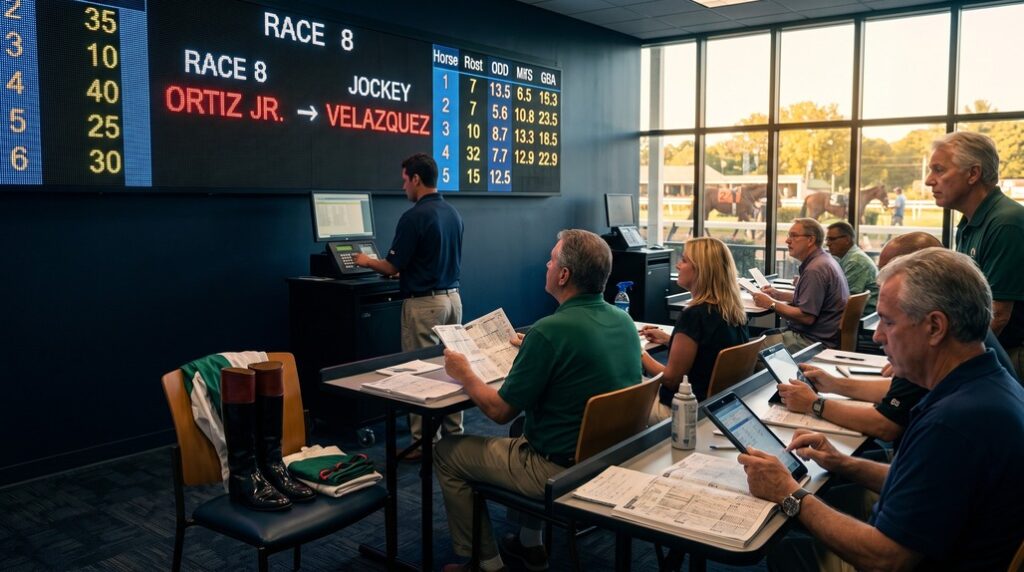
Saratoga Race Course is carrying one more oversized summer before New York racing shifts back toward Belmont Park. The New York Racing Association announced that Saratoga will host 51 total racing days in 2026, including the final Saratoga edition of the Belmont Stakes Racing Festival and a 46-day summer meet running from Friday, July 3, through Labor Day, Monday, September 7. For horseplayers, that is not just a longer calendar. It changes how to read form cycles, pace assumptions, turf usage, trainer placement, weather risk, and bankroll allocation before the new Belmont Park reopens for live racing in September.
Racebook Review readers who followed the recent Saratoga equine safety protocols discussion already know that the Saratoga season is not being judged only by stakes quality. The 2026 meet sits at the intersection of racing volume, heat management, horse welfare, public confidence, and the final stage of NYRA’s temporary schedule adjustments while Belmont Park construction nears its return date.
Why The 46-Day Meet Changes The Saratoga Betting Calendar
The first strategy change is calendar pressure. NYRA’s 2026 Saratoga schedule places Saratoga in a rare role: host of the five-day Belmont Stakes Racing Festival in early June, then host of the full 46-day summer meet beginning with the July 4th Racing Festival. NYRA President and CEO David O’Rourke said Saratoga will return to its traditional 40-day summer schedule in 2027, which makes 2026 a final transitional season rather than a new permanent baseline.
That matters for horseplayers because a longer Saratoga meet can stretch familiar handicapping assumptions. The Spa is already a meet where public money concentrates around leading barns, short-priced juveniles, high-profile jockeys, and graded-stakes names. More dates can create more separation between strong signals and overbet narratives. A horseplayer who treats every Saratoga card like a boutique weekend may burn through capital before the best betting spots arrive.
The meet opens with a three-day July 4th Racing Festival, then moves into Thursday-through-Sunday racing for several weeks before returning to a Wednesday-through-Sunday structure beginning July 29. That creates different wagering rhythms. Early in the meet, bettors may see tighter weekly windows, fresh turf courses, sharper first-meet intent, and barns trying to establish position. Later in the meet, the question can shift toward durability, condition-book placement, surface wear, and whether a horse is being pointed to a specific stakes day or simply filling a race.
The practical move is to divide the meet into phases. Opening weekend should be treated differently from the Jim Dandy lead-up, Whitney Day, Alabama Day, Travers Week, and the closing Labor Day stretch. Each phase has a different field-quality profile, different public attention level, and different risk of overreaction to one eye-catching Saratoga performance.
Stakes Density Could Create Better Prices And More Traps
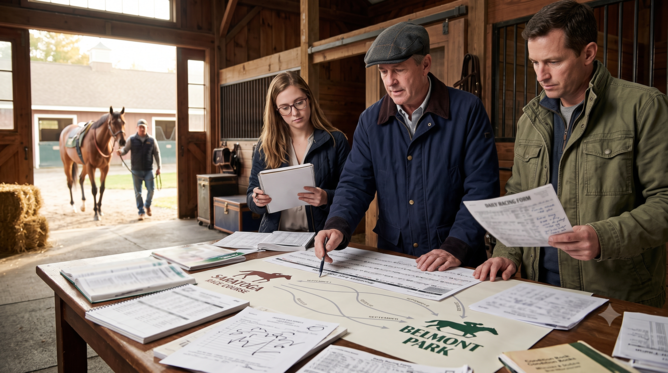
NYRA’s 2026 Saratoga stakes schedule lists 73 stakes worth more than $23.575 million, including 20 Grade 1 races. The headline anchors are the Grade 1, $1.25 million DraftKings Travers on August 29 and the Grade 1, $1 million Whitney on August 8. Those are obvious national betting days, but the deeper strategy point is that stakes density changes how trainers use the meet.
A barn with an older dirt horse, a 3-year-old Travers hopeful, a turf filly, or a promising juvenile may have multiple placement options. That can make intent harder to read from class level alone. Some horses will use Saratoga as a final target. Others will use it as a prep for Belmont Park’s fall return or for Breeders’ Cup positioning at Keeneland. A horseplayer should look at race spacing, workout location, prior Saratoga record, and whether the trainer is choosing an ambitious spot or a confidence-building placement.
Whitney Day is a good example. NYRA said the August 8 card will feature four Grade 1 races: the Whitney, Fourstardave, Saratoga Derby presented by Qatar Racing, and Test presented by Ticketmaster. That kind of card attracts deeper pools and national attention, which can be useful for value players. Larger pools can soften the impact of a few aggressive opinions, but they can also inflate obvious names. When a horse with a famous trainer, high Beyer-type figure, or Triple Crown connection appears, public money can chase reputation faster than form.
Travers Day brings a different problem. A horse exiting the Jim Dandy may be heavily judged by one local prep. Saratoga prep races can be honest indicators, but they are not automatic projections. Pace setups, inside trips, weather, and surface condition can distort one race. The stronger approach is to compare how a horse won or lost with how the Travers field is likely to be built three or four weeks later.
Weather And Heat Protocols Are Now Part Of The Handicap
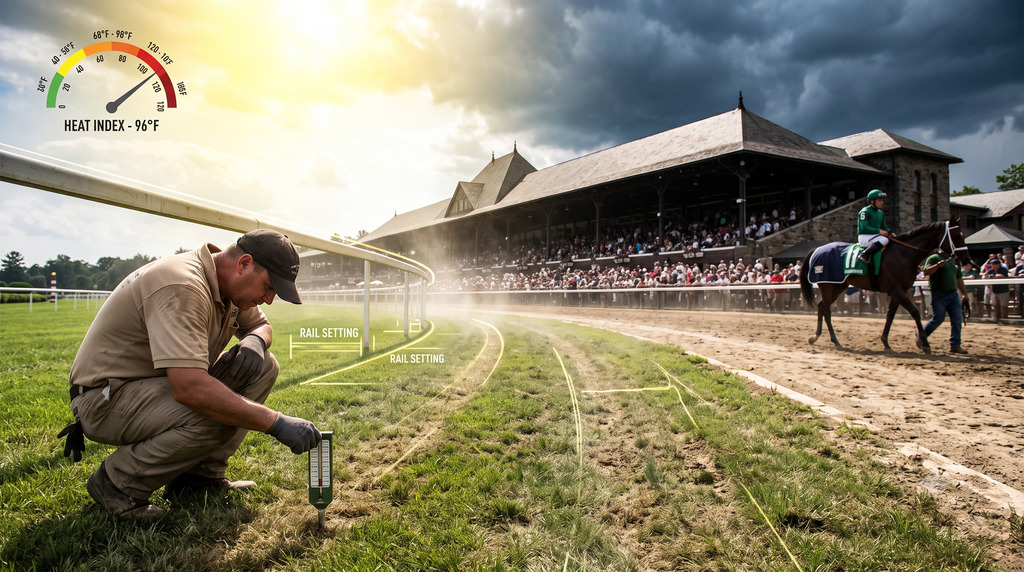
Saratoga handicapping in 2026 cannot ignore weather. Opening weekend arrived during a heat wave, and the Times Union reported that the projected July 3 high at Saratoga Race Course was 96 degrees, with heat index values as high as 101. The same report noted that NYRA expected opening weekend to proceed as scheduled, but the surrounding concern was not theoretical. Summer weather can affect scratches, turf decisions, pace shape, horse energy, rider tactics, and whether a card is changed before post time.
The New York State Gaming Commission’s Heat Management Protocol says that when the NOAA heat index reaches 105, the racetrack veterinarian should contact stewards or judges and track management about dangerous weather conditions. The protocol says track officials and horseperson groups should seek to cancel racing if local conditions are considered dangerous for horses and riders or drivers. For bettors, that turns weather from a casual note into a live risk factor.
A 46-day summer meet gives the weather more chances to intrude. Heat can be more than a binary question of race or cancel. It can affect how horses behave in the paddock, how trainers manage warmups, how much early speed riders want to use, and how much confidence bettors should place in form from a race run under harsh conditions. A horse who fades in extreme heat may not be a poor bet next time under milder conditions. A horse that thrives under one surface profile may not carry the same edge after a thunderstorm forces turf races to dirt.
The same thinking applies to turf usage. Times Union’s Saratoga preview quoted O’Rourke saying NYRA is “pushing at the extreme” of what Saratoga’s turf courses can handle during the expanded meet. That is a meaningful handicapping detail. Turf bettors should watch rail settings, off-the-turf patterns, field-size changes, and whether late-meet turf races begin to reward different running styles than early-meet races.
Belmont Park’s September Return Changes Late-Meet Intent
The bigger New York racing story is what happens after Saratoga. NYRA said the new Belmont Park is expected to reopen for live racing in September, with 2026 marking the final year of Saratoga schedule adjustments. WNYT reported that Belmont Park will reopen on September 18, with the Jockey Club Gold Cup returning to Belmont Park after five years at Saratoga.
That return date changes late-summer decision-making. Trainers may not treat every Saratoga spot as a final exam. Some barns could use Saratoga to build toward Belmont’s fall meet. Others may want to take advantage of Saratoga’s national attention before the circuit moves downstate. The difference matters for bettors trying to separate a horse cranked for today from one being prepared for a later target.
For older dirt horses, the Jockey Club Gold Cup’s move back to Belmont can affect how to read Whitney and late-Saratoga routes. A strong Whitney performance may point toward a Belmont target rather than an immediate Saratoga return. For turf horses, the Flower Bowl’s return downstate means some connections may avoid squeezing too much out of a horse in late August. For 2-year-olds, a long Saratoga meet offers visibility, but it also forces bettors to judge whether early brilliance is sustainable once the circuit changes.
Belmont’s return may also influence wagering psychology. Saratoga often creates strong impressions because the meet feels concentrated, historic, and visible. A flashy Saratoga winner can become a fashionable Belmont or Breeders’ Cup horse overnight. Horseplayers should be careful about paying full price for a horse whose Saratoga win came from perfect conditions that may not repeat downstate.
How Horseplayers Can Adjust Bankroll And Race Selection

The safest 2026 Saratoga approach is selective aggression. A longer meet gives horseplayers more opportunities, but it also increases the number of races where the public has enough information to make prices thin. Bettors do not need to force action on every Saratoga card just because the meet is historic.
One useful adjustment is to build a meet notebook by category rather than by simple win-loss memory. Track which barns win first off a layoff, which jockey-trainer combinations are being overbet, which turf routes become vulnerable after weather changes, which 2-year-old races produce repeatable form, and which races collapse due to pace rather than class. Saratoga rewards memory, but only when that memory is organized.
Horseplayers should also treat stakes days and weekday-style cards differently. A large national card can create value in undercard races because casual money may focus on recognizable stakes names. A quieter Thursday card may offer sharper local pools where obvious angles are already priced correctly. That difference matters across 46 days.
A disciplined plan might separate wagers into three buckets:
- Core opinions: Races where pace, form, surface, and price align strongly enough for win or exacta play.
- Observation races: Juvenile, turf, or weather-affected races that are more useful for future notes than current betting.
- Event-day plays: Larger-pool opportunities on Whitney Day, Travers Day, and other major cards where public money can create price gaps.
That kind of structure helps bettors avoid one of Saratoga’s biggest traps: mistaking race quality for bet quality. A Grade 1 race can be a poor wager if the market has already found the right horse. A lower-level allowance or maiden race can be a better play if the public has misunderstood intent, pace, or surface.
Why 2026 Saratoga Form Could Travel Differently
Saratoga form often carries weight across the national calendar, but 2026 may require more context. A horse exiting the June Belmont Stakes Racing Festival at Saratoga, a July 4th Festival race, the Whitney card, or Travers Day may all carry the Saratoga label, yet those efforts happened at different points in the track’s workload and under different seasonal conditions.
That distinction can matter after Belmont reopens. A late-summer Saratoga horse moving to Belmont in September may face a different surface profile, different track configuration, and different race spacing. Bettors should resist treating “Saratoga winner” as a single category. A front-running turf winner on a firm early-season course does not carry the same profile as a late-meet dirt router who won after a pace collapse.
The 2026 season may produce especially strong public narratives. Saratoga is hosting the final temporary Belmont-related calendar before the downstate return. The meet includes major Grade 1 cards, national contenders, weather questions, and a historic transition for NYRA. That creates stories horseplayers will hear repeatedly. The job is to decide which stories are supported by race evidence.
What To Watch Before Belmont Park Reopens
The final weeks of the Saratoga meet should tell horseplayers which angles are likely to matter once Belmont Park returns. Watch how trainers place horses after major Saratoga efforts. Watch whether turf form remains reliable after weeks of use. Watch how horses exiting heat-affected or storm-interrupted cards perform next out. Watch whether jockey standings are shaping public prices too much. Watch whether barns begin shifting emphasis toward Belmont’s September 18 opening rather than chasing one more Saratoga spot.
The 46-day Saratoga summer meet is a rare handicapping laboratory. It gives bettors a longer sample at one of America’s most demanding tracks, but it also tests discipline. The edge may not come from betting more races. It may come from understanding when Saratoga form is telling the truth, when the public is overpaying for reputation, and when Belmont Park’s return is already shaping decisions before the first fall race is run downstate.