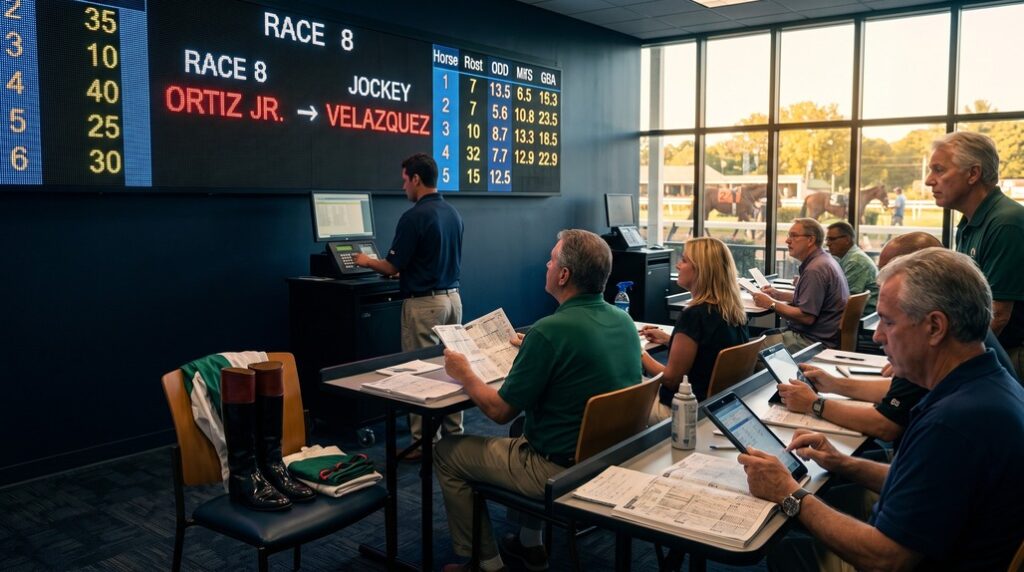
Monmouth Park’s 2026 Haskell Stakes is no longer just a midsummer Grade 1 race for 3-year-olds. It is now sitting inside a bigger New Jersey racing story after Governor Mikie Sherrill signed the state’s FY 2027 Appropriations Act on June 30, 2026, and Monmouth Park confirmed that the annual $10 million purse subsidy will return for 2027. That matters for horseplayers because purse stability can influence field strength, trainer confidence, race placement, betting pools, and how connections view Monmouth’s biggest summer card.
The $1 million NYRA Bets Haskell Stakes is scheduled for Saturday, July 18, 2026, at Monmouth Park in Oceanport, New Jersey. Monmouth’s official Haskell page says the card will include five other stakes, highlighted by the Grade 2 United Nations, along with a $400,000 guaranteed Pick 4 ending in the Haskell and a $300,000 guaranteed Late Pick 5. For bettors, that makes the subsidy story more than a funding headline. It changes how the market may price Monmouth’s premier day, especially after the Triple Crown trail has already shaped public opinions around the 3-year-old division.
Racebook Review readers who followed the 2026 Belmont Stakes recap saw how one major result can reorganize the division quickly. The Haskell now becomes a different kind of test: not a Triple Crown race, but a Grade 1 betting event where purse confidence, local track identity, and national 3-year-old form all meet in one wagering product.
Why The Purse Subsidy Matters Before Haskell Day

Monmouth Park announced on July 1, 2026, that it is set to receive the annual $10 million purse subsidy in 2027 under the state budget signed by Governor Sherrill. Dennis Drazin, chairman and CEO of Darby Development LLC, which operates Monmouth Park, thanked the governor and legislature for recognizing the importance of horse racing to New Jersey. Monmouth’s announcement also said Drazin specifically thanked State Senators Vin Gopal and Paul Sarlo for supporting the industry. The track framed the restored funding as a way to move past uncertainty and keep building toward a stronger Monmouth Park. Monmouth Park purse supplement
The timing matters because the Haskell arrives less than three weeks after the subsidy news. A bettor does not need to pretend the subsidy directly changes the ability of one horse to run nine furlongs. The connection is more practical. Purse stability can help a track maintain a competitive racing program, keep trainers engaged, protect stakes depth, and give owners a reason to view Monmouth as more than a one-day target.
The 2026 Haskell also lands during a season when Monmouth is trying to hold attention in a crowded summer racing market. Saratoga has its expanded meet. Del Mar opens later in July. The Breeders’ Cup conversation is already forming. Monmouth’s funding news gives the Haskell a stronger institutional backdrop: the state is still backing racing, the track is still investing in its signature product, and the race remains central to New Jersey’s racing identity.
For horseplayers, that can affect how the day is bet. Stronger confidence around the track can support larger pools, more casual handle, and deeper national interest. Those conditions can help value players, but only if they understand where public money may overreact.
How The Haskell Card Creates A Different Betting Environment
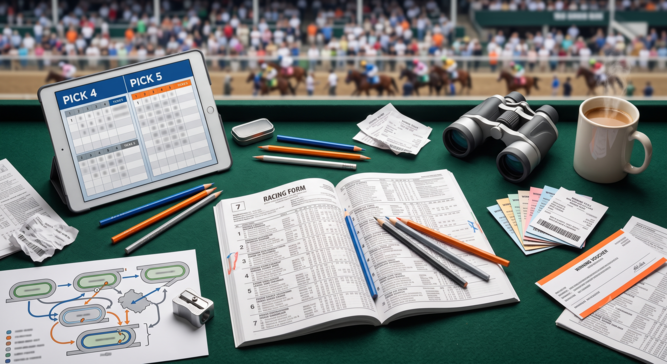
The official Monmouth Park Haskell page lists the 2026 race for Saturday, July 18, with gates opening at 9 a.m. and first race at noon. The page describes the Haskell as the season’s biggest race and notes that the nation’s top 3-year-olds are expected to converge on Monmouth Park for the $1 million Grade 1. It also points to a wagering menu built for event-day handle, including the guaranteed Pick 4 and Late Pick 5.
That type of card changes the betting profile. A normal Monmouth Saturday and Haskell Day are different markets. Haskell Day attracts national money, casual racing fans, multi-race bettors, and players who may have stronger opinions about the feature than the undercard. That can create inefficient prices in both directions.
The obvious horses in the Haskell may be shorter than their fair value because the public recognizes Triple Crown form, high-profile trainers, or familiar jockeys. At the same time, undercard stakes can produce better opportunities because casual bettors may focus their attention on the main event. The key is not simply to handicap the Haskell winner. It is to understand how Haskell reshapes the full card.
The subsidy angle can add another layer. A track with a public funding story attached to its biggest day may draw more attention from racing media and state-level coverage. More attention can mean more money in the pool. More money does not guarantee better prices, but it can reduce the damage caused by one or two aggressive opinions and make exotic wagers more attractive for disciplined bettors.
Why Purse Stability Can Influence Field Strength
The Haskell already has its own pull because of its Grade 1 status, its $1 million purse, its position after the Triple Crown series, and its role as a summer bridge toward the Travers Stakes and Breeders’ Cup Classic. The 2026 subsidy news does not create Haskell’s prestige from scratch. It reinforces the track ecosystem around it.
Monmouth’s 2026 stakes schedule places the Haskell at the center of a major July 18 card. The official stakes schedule lists the NYRA Bets Haskell Stakes (G1) at $1 million, the United Nations Stakes (G2) at $500,000, the Molly Pitcher Stakes (G2) at $500,000, the Monmouth Cup (G3) at $350,000, the WinStar Matchmaker (G3) at $300,000, plus the Wolf Hill and Regret Stakes at $100,000 each.
That matters because owners and trainers do not view the Haskell in isolation. They look at the whole meet, the undercard, shipping logistics, purse structure, weather risk, surface profile, and what the race can do for a horse’s value. A stable that sends one major 3-year-old may also bring horses for other stakes or allowance opportunities. A strong purse environment makes that conversation easier.
For bettors, field strength is not just about names. It is about whether a race includes several legitimate pace types, whether the favorite has to work, whether local preps are respected by national barns, and whether late-developing horses take a shot. A deeper Haskell can make the win pool more difficult, but it can make exactas, trifectas, and multi-race sequences more valuable if the favorite is vulnerable.
The purse subsidy does not tell bettors which horse will win. It tells them the track has less funding uncertainty around its near-term racing product, and that is relevant when judging whether the Haskell remains a serious national target.
The Pegasus Path And Local Form Question
The Haskell betting picture often begins before July 18. Monmouth’s local prep path can matter, especially when a horse earns attention through the Long Branch Stakes, Pegasus Stakes, or another Monmouth race. Local form can be tricky because bettors must decide whether a horse benefited from track familiarity or proved something transferable against better competition.
That question is sharper in 2026 because the Haskell is carrying both national and local narratives. A horse exiting the Triple Crown trail may attract more public money. A locally based or Monmouth-proven horse may offer better value if the pace and track profile fit. The challenge is deciding whether local success is a true sign of readiness or simply a good result against a softer company.
Monmouth’s main track can reward tactical speed, especially when the pace is not overly contested. The Haskell distance of 1 1/8 miles makes stamina relevant, but position still matters. A horse that can sit close without being forced into a duel may have a better setup than a deep closer who needs the race to fall apart. That is why bettors should compare local prep races by pace shape, not only by margin of victory.
The subsidy story fits here because a healthier purse structure can support stronger local stepping-stones. If Monmouth keeps building competitive races around the Haskell, bettors get more useful local evidence. If the local prep races are thin, then the Haskell becomes more dependent on shippers and Triple Crown form.
Why Public Money May Overprice Triple Crown Form
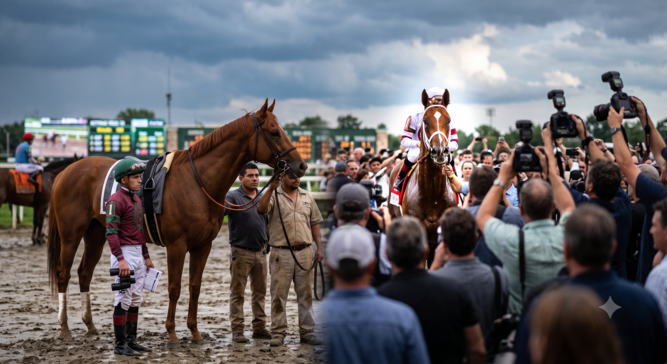
The Haskell often becomes a referendum on the 3-year-old division after the Kentucky Derby, Preakness Stakes, and Belmont Stakes. That can be dangerous for bettors. Triple Crown form is valuable, but it is also highly visible. Highly visible forms are often expensive.
A Belmont winner, Preakness runner, or Derby contender can become an automatic public choice if the field lacks another famous name. But the Haskell is not run at Churchill Downs, Laurel, Pimlico, Saratoga, or Belmont. It is run at Monmouth Park, in midsummer, after a demanding first half of the season. The best horse on résumé is not always the best bet at the price.
The correct question is whether the Triple Crown horse is improving, holding form, or beginning to feel the campaign. Race spacing matters. Workout pattern matters. Shipping matters. So does the trainer’s stated target. Some connections may use Haskell as a major goal. Others may be thinking ahead to the Travers or Breeders’ Cup.
The subsidy story may bring more attention to the Haskell, but attention can make well-known horses shorter. That creates opportunity for bettors willing to oppose a familiar favorite with a horse whose form is less fashionable but whose setup is stronger.
How The Subsidy Could Affect Multi-Race Strategy
Haskell Day’s guaranteed multi-race pools are important because they invite bettors to think beyond the feature. The $400,000 guaranteed Pick 4 ending in the Haskell and $300,000 guaranteed Late Pick 5 create a structure where the Haskell result can anchor or destroy a ticket. The subsidy news can indirectly support those pools by reinforcing confidence in the event, but the betting edge still comes from ticket construction.
A bettor who loves the Haskell favorite may single that horse and spread in less predictable undercard legs. A bettor who thinks the favorite is overbet may use the Haskell as the upset leg and narrow elsewhere. The choice depends on whether the Haskell market is offering value or merely offering a recognizable name.
This is where purse stability and field strength connect. Better fields can create more legitimate contenders, which can make shallow tickets dangerous. Yet better fields can also make the public lean too heavily on a famous horse because handicapping the race feels difficult. A strong Haskell card may reward bettors who are willing to be precise rather than broad.
For example, if the Haskell field includes multiple speed horses, the race may be less favorable to a front-running favorite than the morning line suggests. If the undercard has shorter fields with clear class edges, a bettor might save coverage for the Haskell. If the undercard is deep and the Haskell favorite has a perfect setup, the opposite may be true.
What Bettors Should Watch Before July 18
The most important Haskell betting information will arrive close to race day. Post positions, weather, final works, rider assignments, and scratch updates can change the picture quickly. Monmouth’s funding news gives the event stability, but the race itself still has to be handicapped from the draw forward.
Bettors should watch several points before committing:
- Whether the final field includes true early speed or only tactical types.
- Whether Triple Crown horses are training forward or simply holding condition.
- Whether local prep winners are being undervalued because they lack national names.
- Whether the Monmouth surface favors speed, outside runs, or patient trips.
- Whether Haskell Day undercard stakes create stronger Pick 4 or Pick 5 value than the feature alone.
The strongest approach is to separate the business story from the betting decision. The $10 million subsidy helps explain why Monmouth’s racing product matters and why the Haskell remains a centerpiece event. It does not replace pace analysis, form evaluation, or price discipline.
Why The 2026 Haskell Is Bigger Than One Race
The 2026 Haskell sits at the meeting point of state funding, track identity, national 3-year-old form, and bettor behavior. New Jersey’s restored $10 million purse subsidy for 2027 gives Monmouth Park a stronger planning signal. The Haskell gives bettors a Grade 1 race with national relevance. The full July 18 card gives the market guaranteed pools and several stakes opportunities beyond the main event.
That combination makes the Haskell a better betting story, but not an easier betting race. Public attention can distort prices. Funding confidence can raise expectations. Triple Crown form can dominate the conversation. Local Monmouth form can be dismissed too quickly or overvalued if a horse had an ideal trip.
The smart horseplayer should treat the subsidy as context, not a pick. It tells us Monmouth Park’s biggest race is being staged inside a healthier state-backed racing framework. The wagering edge will still come from judging which horses are peaking on July 18, which prices are inflated by reputation, and which parts of the Haskell Day card offer value that the crowd has not fully priced.