Summer horse racing has always asked bettors to read more than past performances. In July 2026, the weather itself became part of the handicap. Saratoga Race Course opened its expanded 46-day summer meet under heat-wave scrutiny, Monmouth Park canceled live racing for Friday, July 3, because of forecasted extreme heat, and Colonial Downs later canceled its Saturday, July 4 card as tracks across the Mid-Atlantic adjusted schedules around dangerous conditions. For horseplayers, extreme heat protocols are no longer background safety language. They can change post times, scratches, field size, turf availability, pace assumptions, and whether a race is run at all.
That makes heat management a betting issue as much as an equine welfare issue. Racebook Review readers who followed the recent Stephen Foster wagering analysis already know that race shape and market timing matter before major summer targets such as the Whitney Stakes and Breeders’ Cup Classic. Heat adds another variable: a horse’s best figure may not travel cleanly into oppressive humidity, and a sharp morning-line opinion can lose value if scratches or schedule changes reshape the pool.
Why Heat Protocols Now Belong In The Betting Notebook
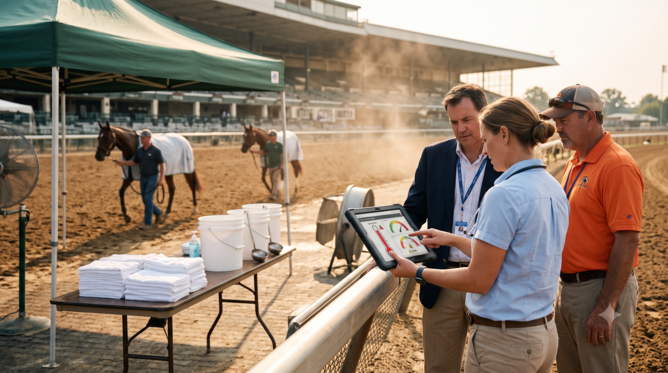
The clearest recent signal came from New York. On June 29, 2026, New York State Gaming Commission Equine Medical Director Scott E. Palmer, VMD, reminded track operators and horsepersons of the state’s Heat Management Protocol as heat index values were expected to reach beyond 105 degrees in parts of the state. The New York heat protocol says that if the National Oceanic and Atmospheric Administration heat index reaches 105, the track veterinarian should contact stewards or judges and track management about dangerous weather conditions. The protocol also says racing should be canceled if local conditions are considered dangerous for horses and riders or drivers.
That 105 heat-index figure matters because it gives bettors a measurable trigger to watch before they put money into early wagers. It does not mean every card below that number is automatically risk-free, and it does not mean every hot afternoon produces the same surface. It does mean serious horseplayers should begin checking heat index forecasts with the same discipline they apply to track-condition changes, rail settings, and late scratches.
Saratoga’s opening weekend made the point practical. The Times Union reported that NYRA expected Saratoga’s July 3 opening weekend to proceed as scheduled, even as forecasts called for a high near 96 degrees and heat index values as high as 101. First post was scheduled for 1:10 p.m., and the 46-day season was beginning during a heat wave rather than a mild summer weekend. That is exactly the type of day when a bettor needs to decide whether to play early, wait for paddock signals, or avoid vulnerable short prices.
How Cancellations Change Field Size, Pool Shape, And Price

Heat cancellations do not only remove races from the board. They can push races into later cards, create extra races, change entry decisions, and compress wagering interest into fewer available spots. Monmouth Park’s official July 1 announcement said its six races scheduled for Friday, July 3, would be used as extras for Sunday after live racing was canceled because of forecasted extreme heat. That is a direct betting-market change, not a minor scheduling note. A race written for one day can reappear under different conditions, with different rivals, different public attention, and a different pool.
Colonial Downs offered another example. BloodHorse reported that Colonial Downs and Monmouth Park canceled racing July 4 because of sweltering heat, and that Colonial’s Miss Disco Stakes and Star de Naskra Stakes were moved to July 11. Colonial also added a July 13 card, with July 5 and July 6 first posts set for 10:45 a.m. ET to avoid the hottest afternoon temperatures. For bettors, that changes the rhythm of a holiday weekend card. A stakes race moved by a week can change trainer intent, workout spacing, and the competition that stays entered.
The mistake is to treat a rescheduled race as the same race in a new box. It may not be. Some horses handle an extra week well. Others were entered because the original timing fit a narrow conditioning window. A barn may scratch from the rescheduled spot and wait for another race. A speed horse drawn favorably on one card may face a different pace complexion once the race is rewritten or reassembled.
For multi-race bettors, cancellations can also alter bankroll pacing. A Pick 5 sequence with two vulnerable favorites can disappear. A later card may attract bigger pools because bettors are making up for lost action. That can create value, but it can also lead to rushed opinions. Heat is one more reason to separate “available race” from “bettable race.”
What Heat Can Do To Pace And Performance
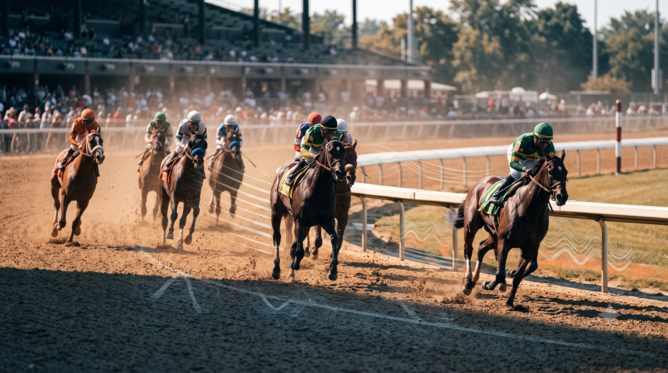
Extreme heat does not produce one universal race bias. Some hot days produce fast, dry dirt tracks. Others bring humidity, storms, sealed surfaces, or turf-course adjustments. The betting problem is that the visible track label may not tell the whole story. “Fast” dirt on a brutally hot day can still create fatigue patterns that affect late runners, first-time starters, and horses returning from layoffs.
The New York State protocol explains the welfare side of the issue: high ambient temperatures and humidity make it harder for horses to avoid overheating. From a betting standpoint, that means recovery and energy distribution become part of form analysis. A horse that is usually professional in the paddock may wash out. A speed horse may be used early but fail to finish with the same efficiency. A deep closer may benefit if the pace collapses, but may also struggle if the race becomes a slow, tactical contest because riders avoid hard early moves.
Heat can be most difficult with young horses and turf races. Juveniles are often asked to handle crowds, travel, paddock pressure, and race-day routine. Add high heat, and bettors should be cautious about taking short prices on appearance alone. Turf races bring a different issue. If storms follow heat, or if maintenance teams protect a course during an extended meet, rails, firmness, and race placement can matter more than a generic turf label.
Saratoga’s expanded 2026 meet makes that especially relevant. The official Saratoga summer guide frames the meet as a long summer racing season, and the opening stretch began with the July 4th Racing Festival. A long meet gives bettors more data, but it also gives heat, rain, and turf usage more chances to distort simple form lines.
Why Bettors Should Watch Decisions Before First Post
The timing of a heat decision can change wagering behavior. New York’s heat protocol says cancellation discussions should happen before the first race whenever possible. That matters because early wagering, advance-deposit betting, and multi-race planning often begin well before the horses are on track. A bettor who waits for official track updates may lose a price, but a bettor who wagers too early may be exposed to late scratches or a canceled sequence.
The best approach is to build a pre-card checklist. Before betting a summer card under heat pressure, check the heat index forecast, official track social channels or notices, post-time changes, scratch updates, turf status, and whether racing officials have already referenced heat protocols. This is not about pretending bettors can predict every decision. It is about knowing whether the race environment is stable enough to support a confident wager.
That checklist becomes more important at tracks with large summer handles and national attention. Saratoga, Monmouth, Colonial Downs, Delaware Park, and Horseshoe Indianapolis all showed in early July 2026 that summer racing schedules can be adjusted quickly. BloodHorse reported July 3 cancellations at Monmouth Park and Delaware Park, and Daily Racing Form reported that Horseshoe Indianapolis canceled a second straight card because of extreme heat.
A professional-style bettor may not need to abandon a hot-weather card, but the bet type should match the uncertainty. Win bets and exactas can be adjusted late. Multi-race bets can become riskier if scratches change pace or if a surface switch removes the reason for the original opinion. Futures and stakes opinions should account for whether a horse’s prep came under abnormal heat conditions.
How Heat Protocols Affect Major Summer Stakes
The stakes calendar makes the issue larger. Saratoga’s summer meet leads into major targets such as the Whitney, Alabama, Travers, and several high-level turf and juvenile races. Monmouth Park’s summer calendar includes the Haskell Stakes. Colonial Downs uses summer racing to showcase Virginia-bred and Maryland-bred stakes. When heat alters one weekend, it can affect horses that are being pointed to graded stakes weeks later.
That creates a form-cycle puzzle. A horse that misses a prep because a card is canceled may enter a major stakes with fewer race-day miles than planned. Another horse may get an extra week that improves conditioning. A third may be forced into a tougher spot because the original race did not go. Bettors should not evaluate those horses only by the final result line. The race that did not happen can be just as important as the one printed in the past performances.
Heat can also shift public perception. If a favorite wins impressively on a hot day, the market may treat the effort as proof of superiority. That may be fair if the horse handled pressure, pace, and conditions better than rivals. It may be misleading if the race fell apart because several opponents failed to cope with the day. The opposite is true for a disappointing favorite. A poor finish in oppressive conditions may be less damning than a poor finish on a comfortable day.
For summer stakes bettors, the question is not simply “Who ran fastest?” The sharper question is “Which performance is repeatable under the next set of conditions?” That is where heat protocols and weather notes become handicapping evidence.
A Practical Heat-Weather Strategy For Horseplayers
Heat-aware betting does not need to become complicated. It needs to become consistent. Horseplayers can protect their bankroll and improve race selection by recording weather-related context alongside normal handicapping notes.
A useful summer-racing notebook should track:
- Heat index and temperature range near post time
- Cancellations, post-time moves, and surface changes
- Late scratches tied to conditions or race-day behavior
- Horses that washed out, acted dull, or showed unusual paddock stress
- Pace collapses that may have been condition-driven
- Rescheduled races and horses returning from canceled cards
The goal is not to diagnose equine health from a distance. Bettors should leave medical judgments to veterinarians and racing officials. The wagering goal is narrower: identify when the public may overrate or underrate a race because the weather context is missing from the headline result.
This matters most when horses return quickly. A horse exiting a heat-stressed race may be overbet if the running line looks clean. Another may be underbet if the form line looks poor, but the conditions explain the fade. Bettors who note the original context have a better chance of finding value when the market relies too heavily on speed figures or finishing position.
Why Summer Racing Markets May Price Heat Differently
The betting market usually reacts fast to obvious scratches and surface switches. It is less consistent with heat. Casual bettors may still bet a familiar trainer, a flashy last-out winner, or a famous stakes horse without adjusting for conditions. More experienced horseplayers may downgrade vulnerable short prices on days when heat, humidity, and schedule changes add uncertainty.
That difference can create value, but only for disciplined players. A hot-weather card is not automatically a chaos card. Favorites can still win. Class can still hold. Trainers can manage horses well. The edge comes from knowing when the public is paying for certainty that the day does not actually offer.
Extreme heat protocols are becoming a bigger factor because racing operators are showing they will act. Monmouth Park canceled. Colonial Downs canceled and moved stakes. Delaware Park adjusted its schedule. Horseshoe Indianapolis lost consecutive cards. Saratoga opened under close monitoring with New York’s protocol in view. Those are real operational decisions, and each one can ripple into betting markets.
What Bettors Should Watch Before The Next Heat Wave
The next major summer heat wave should send horseplayers to official track updates before the past performances. Check whether the track has changed first post, canceled races, moved stakes, shifted races to extras, or flagged heat-management procedures. Then reassess the card from the ground up rather than forcing the original opinion into a changed environment.
For Saratoga and other major summer venues, heat protocols are now part of the race-day information set. They protect horses, riders, drivers, and track workers, but they also reshape the betting product. The horseplayer who treats extreme heat as a serious handicapping variable will be better prepared than the bettor who sees weather only as a reason to complain after scratches appear.
The sharper summer approach is patient. Let official decisions settle. Rebuild pace maps after scratches. Be skeptical of short prices in unstable conditions. Keep notes on weather-distorted form. When the heat breaks and those horses return, the best betting opportunity may come after the dangerous day has already passed.