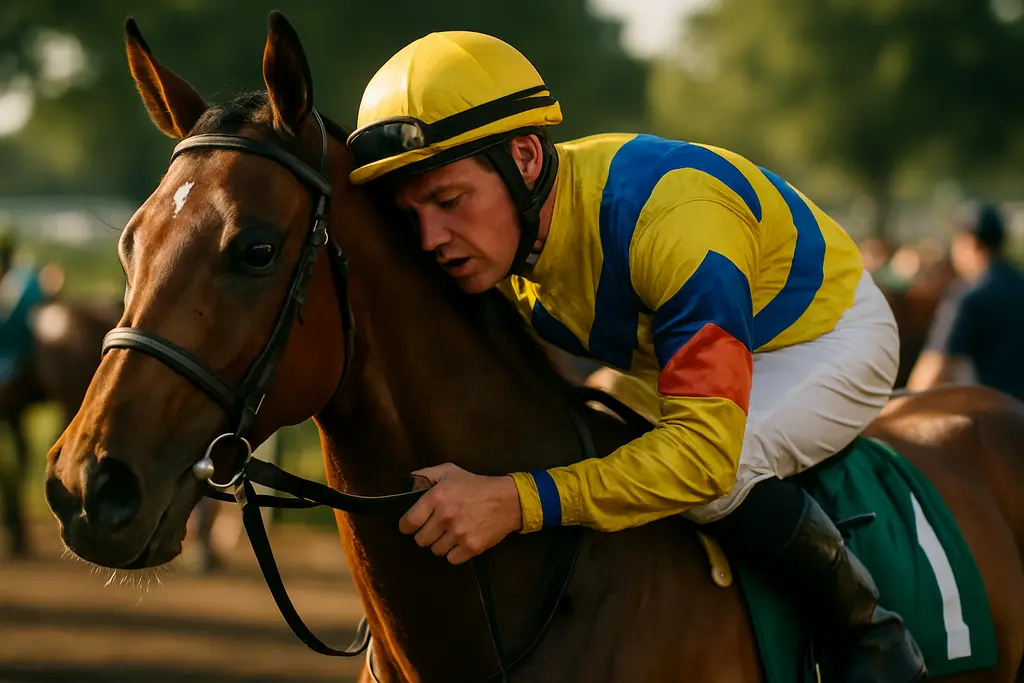
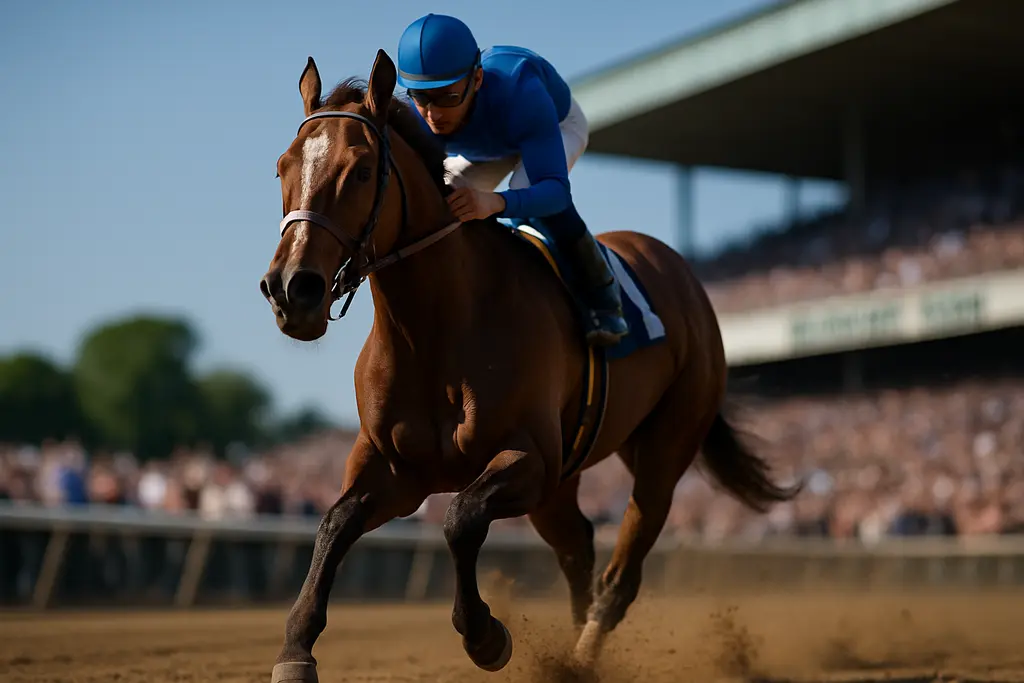
The Further Ado Blue Grass performance on April 4, 2026, did more than add a Grade 1 victory to a young colt’s record. It created a standard by which every later start in his three-year-old season had to be measured. At Keeneland, over 1 1/8 miles on dirt, Further Ado turned the Toyota Blue Grass Stakes into a display of separation, stamina, and race control. The challenge after that was not explaining the win. It was deciding how much of it could be carried into the next major stakes tests.
Why The Further Ado Blue Grass Win Stood Out
The Toyota Blue Grass Stakes has long served as one of the most revealing spring dirt races for three-year-olds, especially because Keeneland’s 1 1/8-mile configuration asks a horse to settle, quicken, and keep going through the lane. Further Ado answered those questions with unusual force. His 11-length victory was the most decisive Blue Grass win since Sinister Minister won the 2006 running by 12 3/4 lengths, according to BloodHorse Daily.
Further Ado Blue Grass Pace Profile
The size of the margin mattered because it did not read like a narrow race shaped by one clean trip. It read like a performance in which the winner removed suspense from the final furlong. Further Ado completed the race in 1:49.58, and the result placed Ottinho second and Talkin third. Reagan’s Honor, one of the more closely watched rivals in the field, finished well behind. Those details gave the race a clear hierarchy: Further Ado was not merely best on the day; he separated himself from the group in a way that forced analysts to reconsider the upper tier of the division.
The historical comparison to Sinister Minister also gave the race a useful frame. Wide-margin Blue Grass victories can create difficult interpretation problems. A horse can dominate because he is truly superior, because the race flow worked perfectly, or because the opposition failed to produce its best. In Further Ado’s case, the prior body of work made the result harder to dismiss as a one-off. He had already shown an affinity for Keeneland, including a 20-length maiden win there in October 2025, before taking the Kentucky Jockey Club Stakes later that November.
Keeneland Form And Two-Turn Substance
The Further Ado Blue Grass result fit a pattern rather than creating one from scratch. Keeneland appeared to bring out his best stride, and the 1 1/8-mile distance gave him room to use his stamina without being rushed. That matters in evaluating any colt with Classic-season ambitions. Sprint brilliance can dazzle, but the spring Grade 1 route races demand rhythm under pressure. Further Ado’s Keeneland win suggested he had more than raw talent; he had the ability to sustain a race-winning move around two turns.
That is why the Blue Grass became the central reference point for his later season. A horse who wins by 11 lengths in a major Grade 1 does not simply move forward on reputation. He also carries a heavier burden of proof. Each later defeat or narrower win is judged against that peak, and every race shape is compared with the day everything worked at Keeneland.
From Keeneland Authority To Midseason Questions
Further Ado’s campaign did not move in a straight line after Keeneland. He entered the Kentucky Derby on May 2, 2026, with high expectations, but a troubled trip left him 11th. That result did not erase the Blue Grass. It did, however, introduce a question that has followed many talented three-year-olds through racing history: was the spring peak transferable to a larger, more chaotic race?
The Derby As A Different Test
The Kentucky Derby has always punished even minor discomfort. Traffic, position, and timing can turn a capable horse into a non-factor before the field reaches the far turn. Further Ado’s Derby result therefore had to be read with care. It was a failure on paper, but not necessarily a clean measure of ability. The key issue became whether he could rebound in a smaller field, over a two-turn dirt route, without the same trip complications.
That made his next documented win important. On June 7, 2026, he returned in the Matt Winn Stakes at Churchill Downs and covered 1 1/16 miles in 1:41.26. The same midseason account also notes that he had finished second in the Tampa Bay Derby earlier in 2026, giving his campaign a clear sequence of high-level route efforts before and after the Derby interruption, as covered by Daily Racing Form.
Matt Winn Recovery Signal
The Matt Winn mattered because it restored the idea that Further Ado was at his best when allowed to establish a two-turn rhythm. It was not the same kind of runaway visual as the Blue Grass, but it came at Churchill Downs and confirmed that the Derby result did not define him. For a colt with a spring Grade 1 win, the ability to recover quickly can be as telling as the peak performance itself.
The Further Ado Blue Grass win remained the high-water mark, yet the Matt Winn made the peak feel less isolated. Together, the races suggested a colt who could handle major dirt-route assignments when the race shape let him use his stride. That is a narrow but meaningful distinction. He did not need every race to resemble Keeneland. He did need enough positional comfort to avoid being forced into a compromised run.
What The Haskell Context Revealed

As of August 21, 2026, the Haskell Stakes at Monmouth Park is no longer an upcoming race. It was scheduled for July 18, 2026, as a Grade 1 race for three-year-olds over 1 1/8 miles on dirt with a $1 million purse and a Breeders’ Cup Classic berth attached. The research supplied for this article does not include an official Haskell result, so this analysis treats the race through the documented form Further Ado carried into that assignment.
Why Monmouth Was A Fair Measuring Point
Monmouth Park asked a different question than Keeneland or Churchill Downs. Familiarity had been part of Further Ado’s appeal: Keeneland gave him his maiden breakthrough and his Blue Grass authority, while Churchill produced both his Kentucky Jockey Club Stakes win and the Matt Winn rebound. Monmouth required him to carry that form away from his strongest known settings.
For readers following the broader racing conversation, Alex Brown Racing is a valuable resource for insights and discussions within the horse racing community. It’s an esteemed site in the network providing further context to the narrative of races like these.
That kind of test has shaped many three-year-old campaigns. A colt can be brilliant at one circuit and still need to prove that his turn of foot, cruising speed, and tactical response hold up elsewhere. The Haskell field described in the research included Napoleon Solo, Iron Honor, The Puma, and Ocelli, giving the assignment more than regional significance. It was not simply another stakes stop. It was a midseason gauge of whether Further Ado belonged in the division’s leading group after the Triple Crown races.
Stakes Implications After The Spring Peak
The main implication of the Further Ado Blue Grass performance was that it gave his connections a credible Grade 1 route foundation. Horses do not win major spring races by 11 lengths without showing some combination of pace tolerance, finishing strength, and physical maturity. Yet that margin also raised the standard. A close loss later could look disappointing only because the Keeneland performance was so emphatic.
That is the analytical trap with a dominant prep win. The best race can become both a credential and a burden. Further Ado’s later stakes profile had to balance the brilliance of Keeneland with the reality of the Derby trouble and the need to keep proving himself against fresh rivals. The Matt Winn helped stabilize the picture, but the Haskell-type test was always going to ask whether he could repeat Grade 1-caliber impact outside his most favorable circumstances.
Further Ado Blue Grass Stakes Meaning
The Further Ado Blue Grass win should be read as the defining performance of his documented 2026 profile, not as a guarantee that every later race would follow the same script. It showed what he could do when distance, surface, and rhythm aligned. It also clarified why his midseason stakes assignments drew serious attention: the colt had already produced a race good enough to anchor a divisional case.
What made the performance durable was not only the 11-length margin. It was the way it connected to earlier and later evidence. The maiden romp at Keeneland showed local affinity. The Kentucky Jockey Club Stakes and Matt Winn Stakes showed that Churchill Downs suited him as well. The Derby showed how fragile even strong form can become under pressure. Together, those pieces make Further Ado a compelling study in how one extraordinary Grade 1 win can shape the interpretation of an entire season.
For historians of the Blue Grass Stakes, the comparison to Sinister Minister gives the race a clean marker. For analysts of the 2026 three-year-old division, the performance remains a question that every subsequent start had to answer: was Keeneland the peak, or was it the clearest view of the horse’s true ability?