The 2025 Preakness Winner, Journalism, gave the 150th running of the Preakness Stakes a result with both immediate force and lasting Triple Crown value. On May 17, 2025, at Pimlico Race Course in Baltimore, he turned a demanding 1 3/16-mile assignment into the central victory of a campaign that had already placed him near the top of his generation. By August 22, 2026, that performance could be read less as a single race and more as the hinge point in a classic-season profile shaped by consistency, pedigree, and repeat appearances at the highest level.
The 2025 Preakness Winner At Pimlico
Journalism’s Preakness victory belonged to a specific historical setting: the 150th edition of one of American racing’s defining classics. The Preakness has often rewarded horses who can recover quickly from the Kentucky Derby, handle tighter race dynamics, and sustain quality over a middle distance. Journalism fit that pattern. He arrived at Pimlico after finishing second in the Kentucky Derby, then converted that form into a classic win two weeks later.
Why The 2025 Preakness Winner Mattered
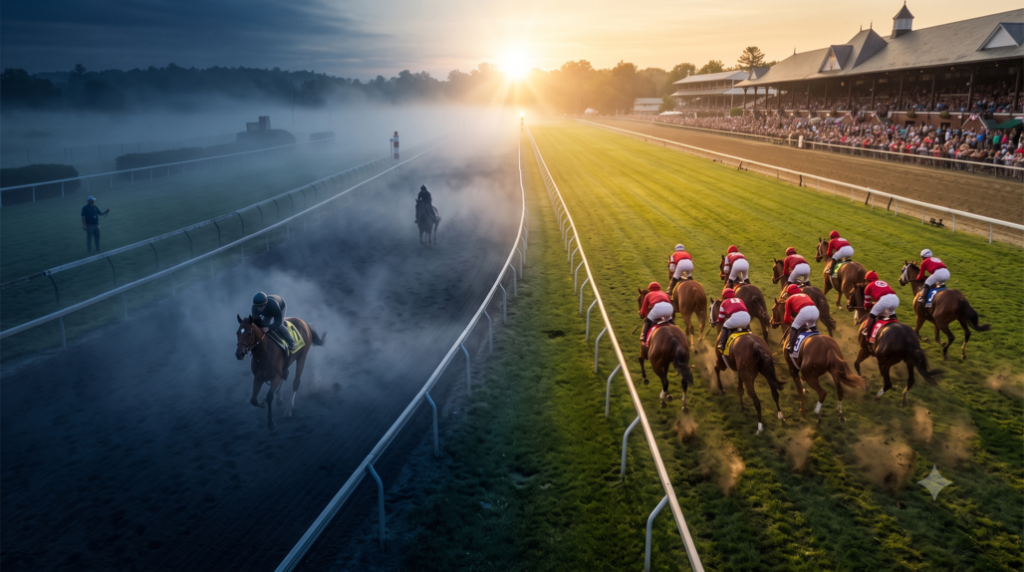
The official Preakness account recorded Journalism’s victory on May 17, 2025, in the historic 150th Preakness Stakes at Pimlico, where he completed the 1 3/16 miles in 1:55.47 and finished ahead of Gosger, according to the Preakness report. That time and placing supply the hard frame of the race. The larger meaning came from sequence: Derby runner-up, Preakness winner, and later Belmont Stakes runner-up. That is where the 2025 Preakness Winner label gains weight.
Many classic winners flash brilliance once. Journalism’s case rested on his ability to keep answering the same question against elite company. The Preakness did not stand apart from his campaign; it clarified it. His Pimlico performance confirmed that his Derby effort was not merely a near miss. It showed that the colt could absorb the pressure of the spring classics and still produce a race-winning finish in the middle jewel of the Triple Crown.
The Race Shape In A Measured Reading
The research record used for this review does not provide an official track-condition description or a full sectional breakdown, so any claim about bias, pace pressure, or surface preference would go beyond the supported facts. What can be said is narrower and firmer: the distance was 1 3/16 miles, the venue was Pimlico, the date was May 17, 2025, and Journalism defeated Gosger in a completed time of 1:55.47.
That still leaves room for analysis. A Preakness winner must usually combine tactical tractability with staying power. The race is shorter than the Belmont Stakes but comes after the physical demand of the Derby for those continuing through the classic series. Journalism’s win, placed between seconds in the Derby and Belmont, reads as the most complete expression of his spring form. He was not simply a horse who found one favorable afternoon. He was a colt whose best efforts repeatedly aligned with the hardest races on the calendar.
Pedigree And Connections Behind Journalism
Journalism was foaled on February 6, 2022, in Kentucky by Don Alberto Corporation. His background carried classic relevance from the start: he is by Curlin, the Hall of Fame racehorse, and out of Mopotism, a mare by Uncle Mo. His trainer was Michael W. McCarthy, with Umberto Rispoli aboard for major wins, and his ownership group included Eclipse Thoroughbred Partners, Bridlewood Farm, Don Alberto Stable, Robert V. LaPenta, Elayne Stables Five LLC, and interests held by Mrs. John Magnier, Michael B. Tabor, and Derrick Smith, as outlined by LegalClarity’s ownership profile.
Curlin, Mopotism, And A Classic Profile
The Curlin influence matters because Journalism’s best work came in races that asked for more than sprinting speed. His Preakness win at 1 3/16 miles, his Derby second, and his Belmont second all pointed toward stamina supported by class. Mopotism’s place in the pedigree, through Uncle Mo, gave the female side a modern American racing connection with its own high-level resonance.
Pedigree never runs the race by itself. Still, Journalism’s record made the page feel practical rather than decorative. His ability to compete through the Triple Crown series suggested a horse bred not only to show talent, but to carry it across repeated major tests. That is the distinction separating a promising colt from a classic-season fixture.
Ownership Built Across Leading Stables
The ownership structure also deserves attention. Journalism was not the project of a single small partnership; he represented a broad group with major racing interests. In modern Thoroughbred racing, that kind of structure often reflects the cost and ambition attached to elite prospects. It can also shape how a campaign is managed, especially when a colt moves from prep races into Triple Crown assignments.
McCarthy’s training role and Rispoli’s association with major victories gave Journalism a consistent sporting identity. The best classic campaigns are rarely accidents. They depend on timing, placement, horsemanship, and a horse capable of making those decisions look sound. Journalism’s 2025 season did exactly that.
Triple Crown Form And Grade I Range
The 2025 Preakness Winner had already built a strong résumé before Baltimore. In 2025, Journalism won the Santa Anita Derby, a Grade I race, and the San Felipe Stakes, a Grade II race. Later, he also won the Haskell Stakes, another Grade I event. Those results gave his Preakness success a wider base. He was not defined by one classic alone.
Derby Second, Pimlico Win, Belmont Second
Journalism’s Triple Crown sequence was unusually clean in its message. He finished second in the Kentucky Derby, won the Preakness, and finished second in the Belmont Stakes. That pattern showed durability across three different classic assignments. It also placed him in a lineage of horses remembered not just for winning one race, but for staying visible throughout the series.
The Belmont placing mattered because it prevented the Preakness from being read as an isolated peak. After winning at Pimlico, Journalism still returned with enough quality to place in the final jewel. The Triple Crown series has often exposed horses who excel once but cannot reproduce their form. Journalism’s record did the opposite. It showed a colt repeatedly able to compete when the national spotlight narrowed to the same generation of three-year-olds.
Speed Figures And Stakes Depth
His Santa Anita Derby win carried a field-best BRIS speed rating of 108, and the research record notes triple-digit figures in his final three starts before the Kentucky Derby. Speed figures are not trophies, but they can help explain why a horse’s form looked sustainable. In Journalism’s case, the figures supported what the results later confirmed: he had the pace-and-stamina balance required for major dirt routes.
By mid-2026, available research placed his career record in an approximate range of 13 to 14 starts, with around seven wins, three seconds, three thirds, and earnings reported between more than US $4.4 million and US $4.7 million. Because the supplied record gives a range rather than one settled line, those figures should be treated as a mid-2026 snapshot rather than a final statistical statement.
Journalism And The 2025 Preakness Winner Legacy
The lasting value of Journalism’s Preakness win lies in how well it connects to the rest of his résumé. A horse can win a classic and still leave analysts debating the strength of the performance. Journalism’s case is less difficult. The Derby second, the Preakness victory, the Belmont second, the Santa Anita Derby, the San Felipe, and the Haskell form a coherent record of high-level production.
A Milestone Framed By Resilience
The 2025 Preakness Winner leaves a legacy rooted in resilience rather than spectacle alone. His campaign showed the value of maintaining form through pressure, travel, and shifting race demands. The Preakness supplied the signature, but the surrounding results supplied the proof that the signature belonged on the page.
For racing historians, Journalism’s place is tied to a milestone edition of the Preakness and to a Triple Crown season in which he never left the central conversation. Those interested in connected horse-racing stories and archival discussions can explore more insights at Alex Brown Racing. Journalism’s 2025 campaign now stands as a case study in how a classic winner can be remembered: not only for reaching the wire first at Pimlico, but for building a body of work strong enough to sustain that victory’s meaning.