Golden Tempo’s summer changed when trainer Cherie DeVaux took the Kentucky Derby and Belmont Stakes winner out of the Grade 2 Jim Dandy Stakes path and aimed him straight at the Grade 1 Travers Stakes on August 29 at Saratoga Race Course. The decision came after a June illness interrupted the colt’s training schedule, turning what had looked like a traditional Saratoga prep into a more patient, workout-based route to the “Midsummer Derby.” For horseplayers, that does more than remove the division’s biggest name from the August 1 Jim Dandy. It changes how the Jim Dandy should be priced, how Travers futures should be read, and how much weight bettors should place on horses who do use the Jim Dandy as their final Travers audition.
Racebook Review readers who followed the earlier Golden Tempo Travers update already know the surface-level story: illness delayed the colt’s return, the Jim Dandy came off the table, and DeVaux kept the Travers as the summer target. The betting question is sharper now. Without Golden Tempo in the Jim Dandy field, the prep race becomes less of a direct class test against the division leader and more of a market sorting race for the horses trying to earn the right to challenge him four weeks later.
Why Skipping The Jim Dandy Changes The Race’s Betting Purpose

The Jim Dandy has long carried value because it gives bettors a Saratoga-based read on 3-year-olds before the Travers. NYRA’s Saratoga stakes page describes the Jim Dandy as a “crucial prep race” and a preview of horses to watch a few weeks later in the Travers. The 2026 Jim Dandy presented by Mohegan Sun is scheduled for Saturday, August 1, creating a four-week bridge to Travers Day. NYRA’s Jim Dandy details underline the race’s traditional role as the main local measuring stick before the Travers.
Golden Tempo’s absence changes that measuring stick. If he had run, bettors would have learned whether his Kentucky Derby and Belmont Stakes form held at Saratoga over the Jim Dandy’s shorter 1 1/8-mile distance. His earlier 2026 profile made that test especially useful because America’s Best Racing noted that the Jim Dandy would have brought him back to 1 1/8 miles after his major wins at classic distances, and that he had finished third in both the Risen Star and Louisiana Derby before the Kentucky Derby.
Without him, the Jim Dandy becomes a different betting product. It can still be a strong race, but it will not answer the most direct question in the 3-year-old division: can the challengers beat Golden Tempo at Saratoga? Instead, it will answer a narrower question: which challenger handles Saratoga well enough to deserve serious Travers consideration?
That distinction matters at the windows. A Jim Dandy winner may look visually impressive and still be overbet in the Travers if bettors forget that Golden Tempo was not in the prep. A Jim Dandy loser may still be live in the Travers if the race shape, surface, or pace setup did not suit him. Horseplayers should treat the Jim Dandy as evidence, not as a final ranking.
What DeVaux’s Patient Route Says About Travers Intent
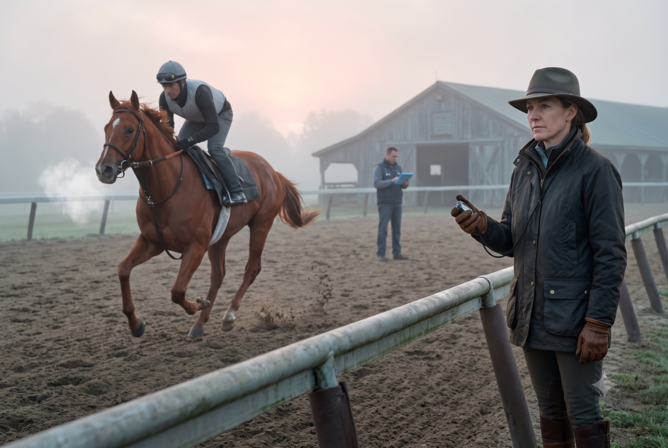
Golden Tempo returned to Saratoga after completing a four-furlong breeze at Keeneland, his first workout since the June 6 Belmont Stakes victory, according to the Times Union. The colt arrived at DeVaux’s barn on the Oklahoma training track to continue preparation for the Travers. The report also noted that Golden Tempo has four wins from six starts and career earnings of $4.63 million, which means he has already done enough in 2026 to justify a conservative approach.
That is the key handicapping point. DeVaux does not need the Jim Dandy to prove Golden Tempo belongs. The race would have supplied information for bettors, but it was not required to establish the colt’s class. BloodHorse reported that the illness delayed training preparations and prevented the planned Jim Dandy start. CBS6 Albany reported that DeVaux said the colt missed about 10 days of training yet remained on course for the Travers.
From a betting standpoint, that creates a clean but difficult question: is training straight to the Travers a sign of confidence, vulnerability, or both? It can be confidence because the barn is protecting the main objective. It can be vulnerability because a missed prep reduces public race-day evidence. The answer will depend on workout pattern, physical appearance, final drills, and how the Travers field comes together.
Bettors should avoid the easy mistake of treating the missed Jim Dandy as automatically negative. Modern elite campaigns often prioritize recovery and peak timing over constant racing. Yet bettors should also avoid treating the Travers as a formality. Golden Tempo will be facing horses with a recent Saratoga race over the track if Jim Dandy runners come back. Race fitness and local experience can matter, especially in a high-pressure 1 1/4-mile Travers.
How The Jim Dandy Market Could Change Without The Star
Golden Tempo’s scratch from the Jim Dandy path removes the most obvious public favorite. That can make the Jim Dandy more appealing from a wagering standpoint because the race may become less top-heavy. Instead of building tickets around whether to single or oppose Golden Tempo, horseplayers can evaluate several contenders whose odds may be closer together.
The danger is that the market may create a replacement favorite too quickly. A horse with strong Triple Crown form, a prominent trainer, or a sharp Saratoga work could inherit public money that would have gone to Golden Tempo. That kind of “default favorite” can be vulnerable. The absence of the division leader does not automatically make the next-best résumé horse a good price.
This is where pace becomes more important. A Jim Dandy without Golden Tempo may have a different early-speed profile, different pressure points, and a different set of rider decisions. If the field lacks a clear pace presence, a tactical horse may become dangerous. If several horses try to prove themselves for the Travers, the pace could become more aggressive than expected. Either scenario can create a result that looks stronger or weaker than it really is.
Horseplayers should compare the Jim Dandy field to the likely Travers field, not just to itself. A horse who wins the Jim Dandy with an easy lead may not get that trip on August 29. A horse who closes into a collapsed Jim Dandy pace may be less effective in a more controlled Travers. The prep still matters, but it must be translated.
Why The Travers Futures Picture Becomes Harder To Price

The Travers is the larger market. NYRA’s 2026 Saratoga summer meet includes 73 stakes worth more than $23.575 million, with the Grade 1, $1.25 million Travers scheduled for August 29 as the meet’s headline 3-year-old race. The meet is also part of a broader transitional Saratoga season before Belmont Park’s renovated facility returns to the New York racing calendar.
Golden Tempo training up to the Travers gives futures bettors less public information and more interpretation risk. A strong Jim Dandy performance by another horse could cause a price move against Golden Tempo even though he did not run. A dull Jim Dandy could make Golden Tempo look even stronger without requiring him to do anything. Both reactions can be exaggerated.
That is why bettors should separate market movement from new evidence. If a Jim Dandy winner shortens dramatically for the Travers, ask whether the race produced a genuinely transferable performance. Did the horse finish strongly? Did the final time fit the day? Did the trip require sustained pressure? Did the horse look like one who wants 1 1/4 miles? Did the runner show the kind of tactical flexibility needed against Golden Tempo?
For Golden Tempo, the missing prep makes the final three weeks of training especially important. His works at Saratoga, his gallop reports, and his physical appearance in the days before the Travers will carry more weight than usual. If he trains steadily, bettors may accept the missed Jim Dandy as a smart management decision. If the pattern becomes uneven, the Jim Dandy absence will become a bigger risk signal.
What Golden Tempo’s Triple Crown Form Does And Does Not Prove
Golden Tempo’s 2026 résumé is already unusual. AP reported that he won the Kentucky Derby on May 2 at Churchill Downs, giving DeVaux the first Kentucky Derby victory by a female trainer and giving jockey José Ortiz his first Derby win. AP also reported that Golden Tempo won at 23-1, completing the 1 1/4-mile race in 2:02.27.
That Derby win was followed by a Belmont Stakes victory at Saratoga on June 6, which turned him from a one-race upset story into the central 3-year-old of the summer. The Times Union described him as the Kentucky Derby and Belmont Stakes champion and noted that DeVaux, a Saratoga Springs native, became the first woman to train a Kentucky Derby winner before adding a second Triple Crown race win with the Belmont.
That form proves class and stamina. It does not prove he will be fully sharpened off a training-only bridge into the Travers. It also does not prove that 1 1/8-mile prep horses cannot improve past him by late August. Three-year-olds can change quickly during summer. Some are still developing. Some are worn down by the spring. Some improve when they get distance. Others are exposed when they finally meet the division leader.
Bettors should respect Golden Tempo’s class without turning it into automatic Travers certainty. The missed Jim Dandy makes that balance more important. He has earned favoritism, but a favorite can be both deserving and overbet.
How Jim Dandy Bettors Should Read A Prep Without The Target Horse
The Jim Dandy now becomes a scouting race. That does not make it a weak race. It makes it a different kind of race. Bettors should watch for traits that translate to the Travers rather than traits that only win the Jim Dandy.
The most useful signals are stamina through the wire, tactical adaptability, response to Saratoga’s surface, and the ability to handle pressure before the far turn. A horse who wins with a perfect inside trip may be less attractive next time if the Travers pace looks more demanding. A horse who loses ground but finishes with energy may be more interesting if the price drifts.
Race spacing is another factor. A Jim Dandy horse will have four weeks to the Travers. That can be ideal for some barns and too tight for others, depending on how hard the horse runs. If the Jim Dandy becomes a demanding race, the winner may have less left for the Travers than the public assumes. If it becomes a soft tactical race, the top finishers may not have answered the stamina question.
Bettors should also watch which connections commit to the Travers after the Jim Dandy and which ones hesitate. A confident post-race plan can matter, but it should be backed by the horse’s condition and the race’s quality, not just public optimism.
Why The Absence Could Create Better Jim Dandy Value
Golden Tempo skipping the Jim Dandy may make the race more bettable. A superstar favorite can compress a market. Without him, the win pool may offer more playable prices, and exotics may become more attractive if the field is balanced. That is especially true if the public overreacts to one familiar name.
For multi-race bettors, the Jim Dandy could become either a spread race or a value single, depending on the field. If several contenders have similar profiles, spreading may be the correct move. If one horse has a clear pace edge and the public is distracted by bigger names, that horse could be useful as a single in Pick 4 or Pick 5 sequences.
The key is not to overstate the Golden Tempo absence. He is not in the race, so bettors should not handicap the Jim Dandy as if everyone is running for second behind him. The field deserves its own analysis. Yet the Travers lens still matters because public money may price some Jim Dandy runners based on what bettors think they can do to Golden Tempo later, not solely on what they can do on August 1.
That creates opportunity. The best Jim Dandy bet may be the horse most suited to the actual Jim Dandy pace and distance, not the horse most likely to attract Travers hype.
What Bettors Should Watch Before The Travers
Between the Jim Dandy and Travers, the market will be shaped by two streams of information. One comes from the Jim Dandy result. The other comes from Golden Tempo’s training. The bettor who weighs only one side will miss the full picture.
For Golden Tempo, watch the timing and quality of his Saratoga works, whether DeVaux keeps a steady schedule, and whether the colt appears to regain rhythm after the June illness. For the Jim Dandy horses, watch whether the race produces a strong final quarter, a clean stamina signal, or a pace-distorted outcome. Then compare those clues against likely Travers pace.
The Travers picture changes because the best horse is not using the traditional prep. That increases uncertainty. It also creates value for bettors who can handle uncertainty better than the market. Golden Tempo may arrive fresh, fit, and ready to confirm his status as the division leader. A Jim Dandy runner may arrive sharper, locally proven, and better priced than the favorite. Both paths are plausible.
The safest conclusion for horseplayers is not to choose a side too early. Let the Jim Dandy reveal which challengers are real. Let Golden Tempo’s works reveal whether the illness interruption is fully behind him. Then price the Travers on August 29 as a race between evidence and reputation, not as a coronation or a panic reaction.