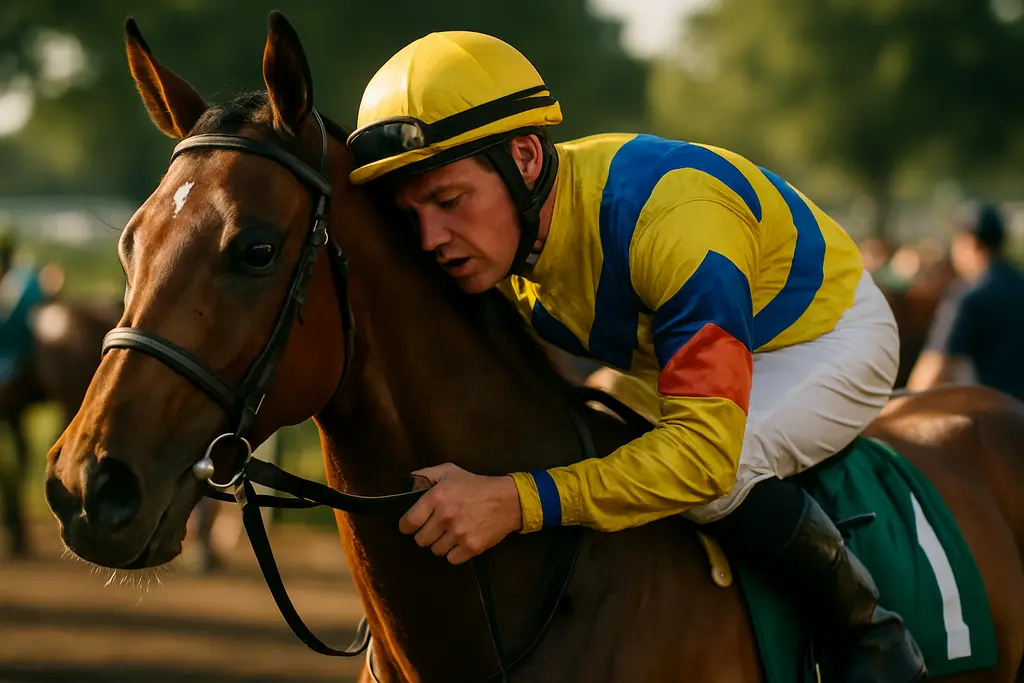
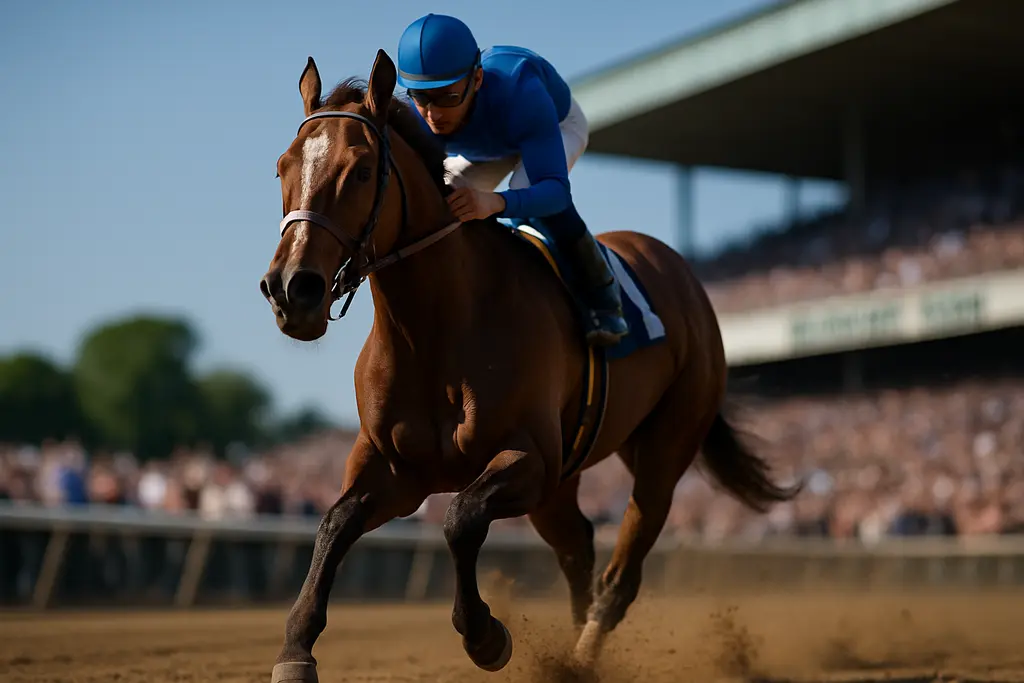
The Journalism comeback at Del Mar on July 18, 2026, lasted barely more than a race, yet it now reads like the closing chapter of a career defined by class, strain, and competitive will. Journalism, already known as the 2025 Preakness Stakes winner, returned in the Grade 2 San Diego Handicap, overcame trouble before the break, and still won by three-quarters of a length. Six days later, on July 24, 2026, his retirement from racing was announced after the injury sustained in the starting gate, with a 2027 stallion career planned at Ashford Stud in Versailles, Kentucky DRF reported.
Why The Journalism comeback Mattered
Horse racing often remembers brilliant wins, but it tends to study difficult wins more closely. Journalism’s San Diego Handicap did not offer a clean measure of superiority from the opening strides. It became a test of how much natural ability, conditioning, and temperament could survive a compromised start. That is why the race carries more weight than a standard summer Grade 2 result at Del Mar.
Journalism comeback And The Gate Incident
Before the race had properly begun, Journalism sustained an injury in the starting gate. The incident left him several lengths behind the field, a deficit that would have ended the competitive chances of many high-class horses. Instead, he rallied from last place and reached the wire in front. The margin, three-quarters of a length, was not extravagant, but the manner of the victory made it unusually revealing.
The Journalism comeback turns on that contrast: a horse losing ground before he could establish position, then finding enough rhythm to run down the race. Del Mar can reward tactical speed, especially when rivals are able to settle into early order. Journalism was denied that comfort. His win was not about having everything arranged for him. It was about recovering from disorder quickly enough to let his class take over.
The Trainer’s Reading Of The Performance
Trainer Michael McCarthy’s assessment captured the point without softening the severity of the moment. He said, “To suffer an injury in the gate, give away that much ground, and still win purely on heart and class tells you everything you need to know about him.” Journalism ended his racing career with $4,770,755 in earnings, and that final race added a demanding kind of proof to the record WLKY noted.
For a historian of the Triple Crown era, the phrase “heart and class” has to be handled carefully. It can become shorthand for sentiment. In this case, the race evidence supports it. Journalism had already shown high-level quality at three. At Del Mar, he showed something different: the ability to keep competing after the race had gone wrong at its most unforgiving point.
Race Shape And The Del Mar Test
The San Diego Handicap sits in a part of the racing calendar where older-horse credentials can harden or collapse. For Journalism, the Del Mar return was framed by his earlier classic form, but the race itself had to be judged on present condition. A horse returning after a demanding three-year-old campaign is not simply carrying reputation; he is asked to prove that the engine still fires under pressure.
From Last Place To A Measured Win
The race shape was shaped first by loss. Journalism began several lengths behind, meaning he had to spend energy simply to rejoin the contest. The rally from last place was not only a matter of acceleration. It required composure, a sustained response, and the ability to keep pressure on through the lane. Winning by three-quarters of a length after such a start suggests a horse who still had competitive command, even if the physical cost became clear afterward.
That point matters because comebacks can be misread. A horse can return and win without proving much if the race is soft or perfectly arranged. Journalism’s Del Mar race was different. The starting gate problem created an unplanned stress test. His response gave the performance its historical texture, while the retirement announcement reminded observers that courage and soundness are not the same thing.
Del Mar As A Stage For A Final Statement
Del Mar has often been a place where summer form receives national attention, and the San Diego Handicap gave Journalism one last stage beyond the Triple Crown spotlight. The setting did not erase what had happened at Pimlico, Churchill Downs, or in the Belmont Stakes. It reframed those races by showing that his competitiveness was not confined to the spring of his three-year-old season.
Those interested in further exploring the nuances and broader implications of Journalism’s racing career may find Alex Brown Racing to provide insightful context on the sport and its participants. Journalism’s case fits that broader sporting discussion because it joins performance analysis with welfare reality. The win was brave; the retirement was rational.
From Triple Crown Form To Retirement
Journalism’s career already carried a classic shape before July 2026. He won the 150th Preakness Stakes on May 17, 2025, at Pimlico Race Course in Baltimore. He also finished second in the 2025 Kentucky Derby and second in the 2025 Belmont Stakes. Those three results placed him at the center of his generation’s Triple Crown conversation, not as a horse who flashed once, but as one who kept showing up in the defining races.
The Preakness As Career Anchor
The Preakness victory remains the anchor because it gave Journalism a classic title. In Triple Crown history, the middle jewel often reveals a different sort of horse than the Derby. The spacing, the race dynamics, and the mental recovery from Churchill Downs can expose limitations. Journalism’s win at Pimlico made him more than a Derby runner-up with promise. It made him a classic winner whose reputation had a firm result beneath it.
His second-place finishes in the Kentucky Derby and Belmont Stakes gave the record breadth. He was not described in the research as a Triple Crown winner, but he was present at the highest level through all three races. That matters historically. Many horses can produce one great afternoon. Fewer can remain relevant across the full Triple Crown sequence.
The Breeders’ Cup Classic Marker
Journalism also finished fourth in the 2025 Breeders’ Cup Classic. That placing, while not a win, extended his résumé beyond the Triple Crown series and into the older-distance championship conversation of the autumn. It suggested that his quality was not restricted to one track, one race, or one set of spring conditions.
The July 24, 2026 retirement announcement therefore closed more than a comeback bid. It closed the racing portion of a career that had touched every major reference point available in the research: the Derby, the Preakness, the Belmont, the Breeders’ Cup Classic, and a final Del Mar stakes victory. His move to Ashford Stud in 2027 will shift the assessment from race record to bloodstock influence, but that belongs to a different chapter.
Journalism comeback At Del Mar
The Journalism comeback at Del Mar should be remembered as both victory and warning. It showed the enduring brilliance of a 2025 Preakness winner who could still overcome a terrible start and defeat Grade 2 company. It also showed how quickly a racing career can turn, even in the hour of success.
What remains is a compact but powerful historical profile. Journalism won a classic, placed in the other two Triple Crown races, finished fourth in the Breeders’ Cup Classic, returned at Del Mar, endured an injury before the start, rallied from last, and won his final race. That is not a long farewell. It is a hard, clear racing story: talent under pressure, class under strain, and an ending that came almost immediately after one of his most revealing performances.